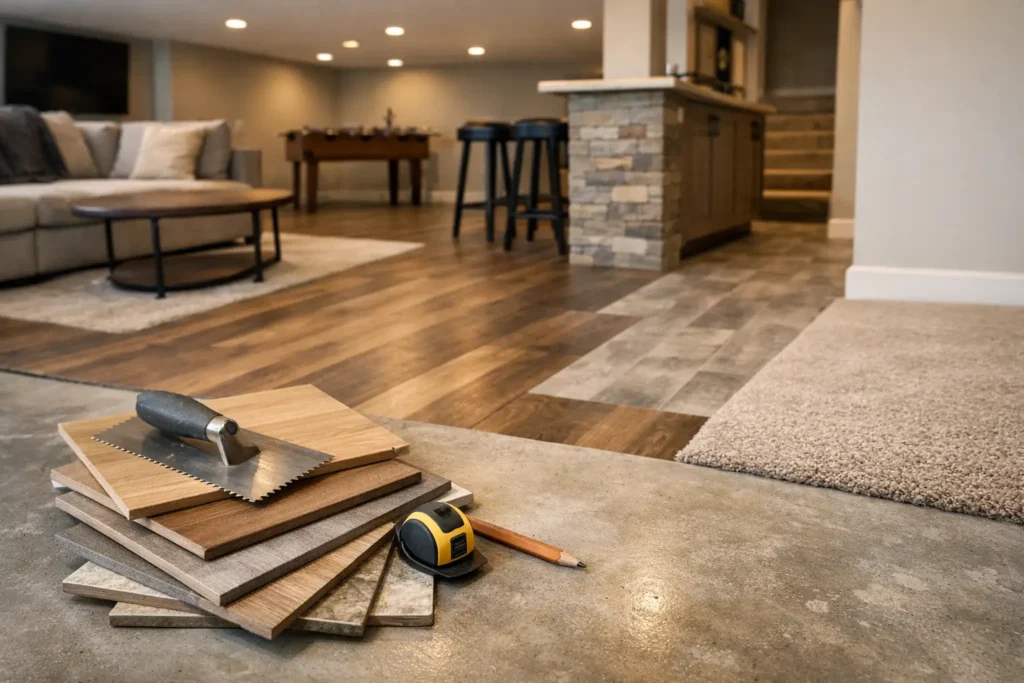
A basement can look dry for months and still surprise you the first time heavy rain hits. That is why choosing the best basement flooring is less about style alone and more about how the space actually lives. If your basement is used by kids, guests, storage, or as a home office, the right floor needs to handle moisture, temperature swings, and everyday wear without becoming a future repair bill.
What makes the best basement flooring different
Basements are not like the main floor of your home. They sit below grade, which means they deal with more humidity, cooler slab temperatures, and a higher chance of moisture moving up through the concrete. Even a beautifully finished basement can have problems if the flooring choice ignores those realities.
That is why the best option is usually one that tolerates moisture well, stays stable over concrete, and still feels comfortable enough for daily use. Homeowners often come in wanting the same floor they love upstairs. Sometimes that works. Sometimes it creates trouble a year later. A good choice balances appearance, durability, and what your basement can realistically support.
Best basement flooring options to consider
Luxury vinyl plank and tile
For many homes, luxury vinyl plank is the best basement flooring choice because it checks the most boxes. It handles moisture better than many traditional materials, it looks good, and it comes in styles that mimic hardwood or stone without the same risk. It is also softer and warmer underfoot than tile, which matters in a basement lounge, playroom, or guest space.
Not all vinyl products are equal, though. A thicker wear layer usually performs better in busy spaces. The quality of the locking system matters too, especially on basement slabs that may not be perfectly level. If the subfloor prep is rushed, even a good product can feel hollow or separate over time.
Tile
Porcelain or ceramic tile is one of the strongest choices for wet-prone basements. If your basement has a history of minor water issues, tile can make a lot of sense. It does not absorb water the way wood-based materials do, and it is very durable.
The trade-off is comfort. Tile can feel cold and hard, which is not ideal for every finished basement. In a laundry area, basement bathroom, or entry from the yard, that may be fine. In a family room where people sit on the floor or where kids play, it may feel less inviting unless you add area rugs or radiant heat.
Engineered wood
Some homeowners still want a wood look with more authenticity than vinyl. Engineered wood can work in certain basements, but it is not the safest universal pick. It is more dimensionally stable than solid hardwood, yet it still contains real wood and remains more sensitive to moisture than vinyl or tile.
This option is best when the basement is very dry, well-sealed, and climate controlled year-round. It also helps to start with a proper moisture test on the slab. If there is any history of dampness, this may not be the floor to gamble on.
Laminate flooring
Modern laminate has improved a lot, and some products now offer decent water resistance. It can be attractive and cost-effective, especially for homeowners trying to finish a basement on a tighter budget. It also gives a more solid feel underfoot than some lower-cost vinyl products.
Still, laminate is not always the safest answer below grade. Water-resistant is not the same as waterproof. If moisture gets into seams or beneath the floor, swelling can happen. In a very dry basement with good vapor control, it may perform well. In a basement with even occasional moisture concerns, there are usually better choices.
Carpet tiles or low-pile carpet
Carpet makes a basement feel warmer and quieter fast. That is the main reason homeowners still ask for it. In media rooms, bedrooms, and play spaces, it can create a comfortable finished feel that hard flooring does not always match.
The concern is moisture. Traditional wall-to-wall carpet can trap dampness, odors, and allergens if the basement is not consistently dry. Carpet tiles are often the smarter version of this idea because damaged sections can be replaced without tearing out the whole room. If comfort matters most, carpet can work, but only when moisture control is already handled.
The best basement flooring depends on how you use the space
A workout room does not need the same floor as a guest suite. A basement rental unit has different priorities than a storage area or a home theater. That is why the best basement flooring is usually tied to the room plan, not just the sample board.
If you want a family room that feels warm and easy to maintain, luxury vinyl plank is often the most practical fit. If you are finishing a basement bathroom or laundry zone, tile may be the better long-term move. If you are building a high-end basement with careful humidity control, engineered wood may be worth considering in select areas.
This is also where layout matters. Many finished basements use more than one flooring type. A homeowner may use tile near a bar sink or bathroom and vinyl plank through the main living area. That kind of combination often gives better performance than forcing one material into every corner.
Do not ignore the concrete underneath
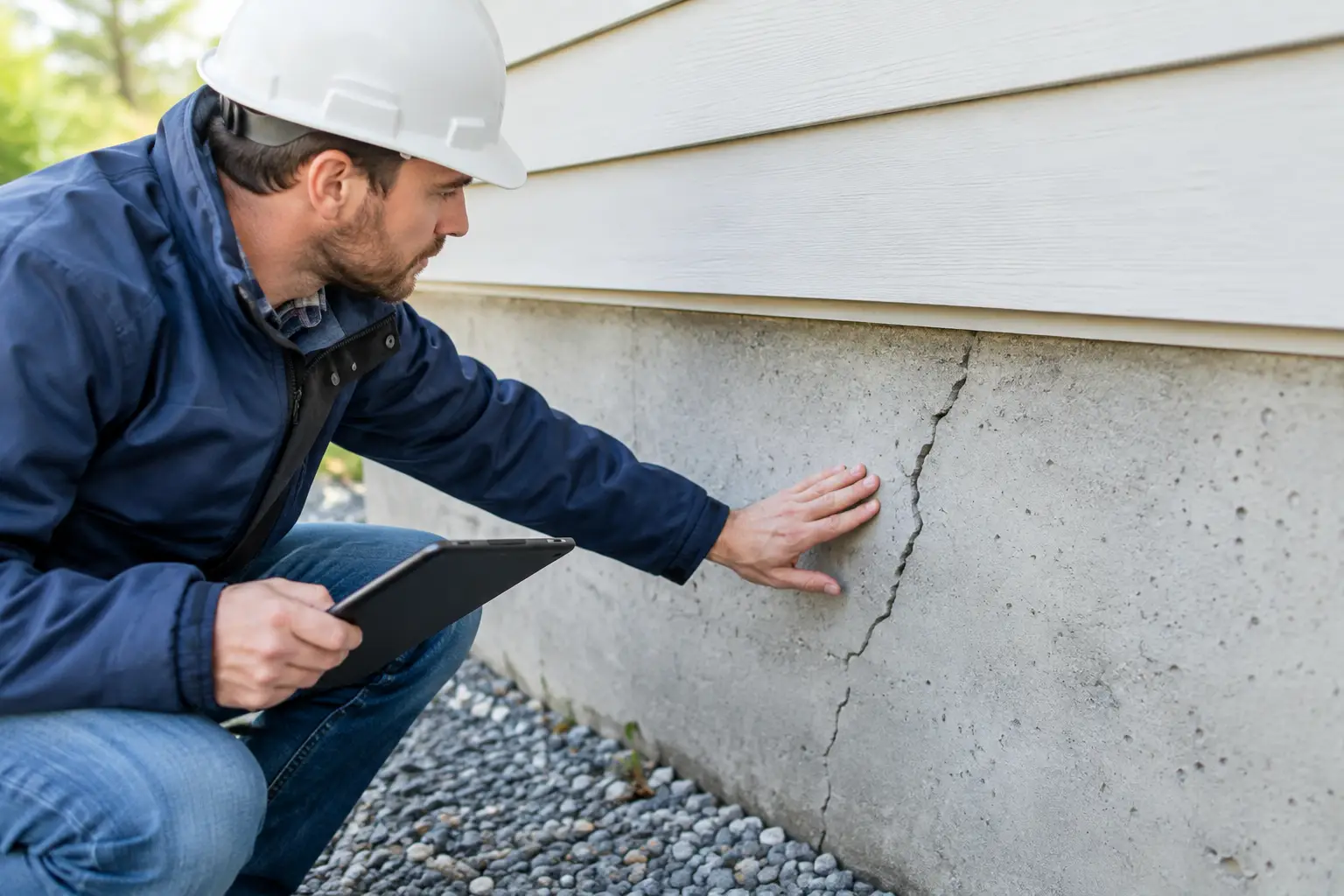
The flooring itself gets most of the attention, but the slab underneath often determines whether the project lasts. Concrete can hold and transfer moisture even when it looks fine on the surface. Cracks, uneven spots, or past water intrusion need to be addressed before any finish floor goes down.
A proper basement flooring installation may include moisture testing, crack repair, leveling, underlayment, or a vapor barrier depending on the material. Skipping those steps to save time usually costs more later. Floors that buckle, lift, or trap moisture rarely fail because of color choice. They fail because the prep work was not handled correctly.
Budget matters, but so does replacement risk
It is normal to compare basement flooring by price per square foot. That is part of the decision, but not the whole decision. A cheaper floor that has to be replaced after one moisture event is not really cheaper.
Vinyl plank often hits a strong middle ground for value. Tile can cost more in labor, but it may offer the best durability in moisture-prone areas. Carpet may seem affordable up front, but replacement costs can rise quickly if mildew or odors develop. A smart budget looks at product cost, installation quality, lifespan, and the realities of your basement.
When homeowners make the wrong choice
The most common mistake is picking flooring based only on the look they want upstairs. Hardwood-style floors are popular, and many people naturally want the same visual throughout the home. But basements need materials that match basement conditions.
Another mistake is assuming a basement is dry because there has never been standing water. Moisture problems are not always dramatic. Sometimes they show up as musty smells, curling edges, or mold under the floor. Small warning signs matter.
The last big mistake is treating flooring as a simple final touch. In a basement, it is part of the performance of the whole space. The floor should work with insulation, moisture control, layout, and how the room is used every day.
So what is the best choice for most homes?
If you want the most dependable all-around answer, luxury vinyl plank is often the best basement flooring for most finished spaces. It offers strong moisture resistance, a comfortable feel, easy maintenance, and a wide range of looks. That makes it hard to beat for family rooms, home offices, playrooms, and multi-use basements.
If moisture risk is higher or the space includes bathrooms and utility areas, tile deserves a serious look. If comfort is the top priority and the basement is consistently dry, carpet can still have a place. The right answer is not always the most expensive material. It is the one that fits your basement honestly.
A finished basement should feel like a real part of your home, not a gamble hidden below it. If you are planning a remodel and want clear advice on the best flooring for your space, contact Greenwood Contractors for a free estimate. We will help you choose a floor that looks good, lasts well, and makes sense for how you actually live.