
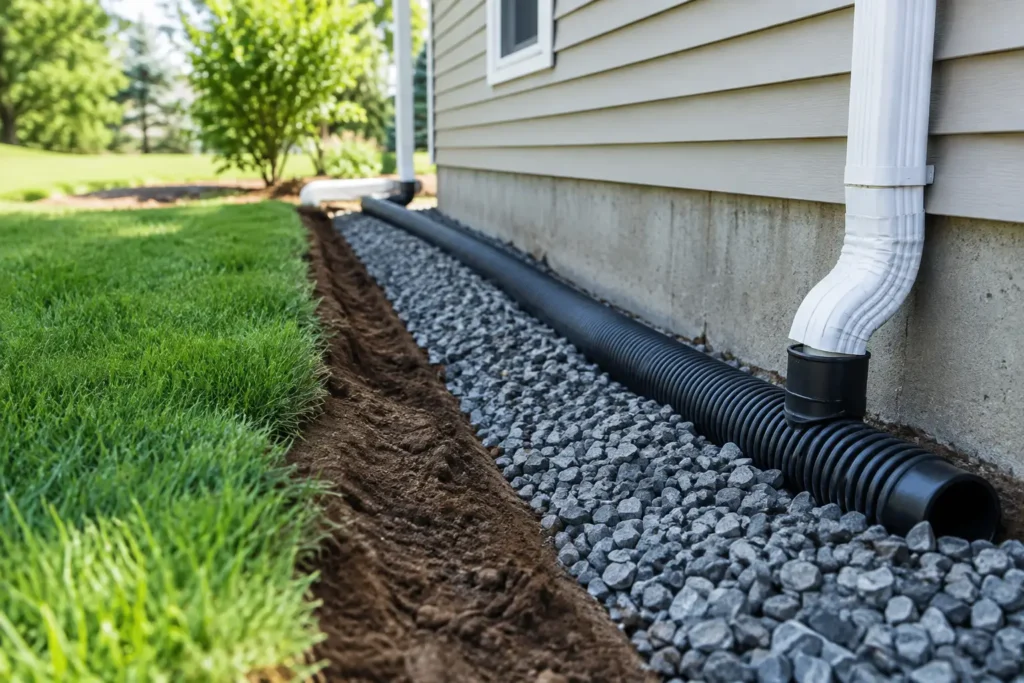
A damp basement wall rarely starts as a basement problem. More often, it begins outside: roof runoff drops too close to the house, soil slopes toward the foundation, or groundwater has nowhere to go. The right foundation drainage solutions move water away before it can create leaks, mold, soil pressure, cracked concrete, or expensive structural repairs.
For homeowners, drainage can feel like a hidden issue until there is standing water after a storm. But early action is usually simpler and more affordable than waiting for visible damage. A professional assessment helps identify where the water is coming from, how it moves across the property, and which repair will deliver lasting protection.
Why Foundation Drainage Matters
Every home needs a plan for rainwater and groundwater. Water that collects beside a foundation does more than make the soil muddy. As saturated soil expands, it can put pressure on basement walls and footings. Over time, that pressure may contribute to cracks, bowing walls, settling, and water intrusion.
In Los Angeles, drainage needs can be easy to overlook during long dry stretches. Then a heavy rain exposes problems quickly. Properties on slopes, homes with older drainage systems, and yards with dense clay soil often need extra attention. The goal is not simply to get water out of the basement. It is to prevent water from reaching the foundation in the first place.
Warning signs deserve a closer look. You may notice water stains along basement walls, a musty odor, peeling paint, white mineral deposits on concrete, or puddles that remain near the house for more than a day. Doors that suddenly stick, new drywall cracks, and soil that washes away near the foundation can also point to drainage concerns.
Foundation Drainage Solutions Start With the Source
A dependable drainage plan is based on the property, not a one-size-fits-all product. Before recommending work, a contractor should look at roof runoff, gutters, downspout locations, yard grading, paved surfaces, existing drains, and the condition of the foundation itself. A leak can have more than one cause, and treating only the most visible symptom may leave the real problem in place.
For example, a homeowner may think a basement wall needs interior waterproofing. That may help in some cases, especially when water is already entering the space. However, if downspouts discharge next to the wall and the grade slopes inward, exterior corrections should come first. Managing water at the surface reduces the burden on every other part of the system.
Gutters and Downspouts
Gutters are the first line of defense. They collect roof runoff and direct it to downspouts. When gutters are clogged, undersized, or damaged, water can spill directly beside the house. That concentrated flow can saturate soil quickly.
Downspouts should carry water well away from the foundation. Short extensions that end at the edge of a planting bed are often not enough. Depending on the property, downspouts may connect to buried solid pipe, a dry well, a swale, or another approved discharge area. The correct destination depends on local requirements, lot size, soil conditions, and how water flows across neighboring properties.
Proper Yard Grading
The soil around a home should slope away from the foundation so rain naturally moves outward. Even a small reverse slope can direct water toward the house. This issue is common after landscaping work, patio installation, additions, or years of mulch and soil buildup along exterior walls.
Regrading can be a straightforward solution when there is enough room around the home. The contractor reshapes the soil to create a gentle, controlled slope away from the structure. In tighter side yards or on steep lots, grading may need to work alongside drains, retaining walls, or hardscape improvements.
Exterior Drainage Systems for Persistent Water
When surface improvements are not enough, an exterior drainage system may be the right answer. These systems collect water before it can build pressure against the foundation and guide it to a safe outlet.
French Drains
A French drain is a gravel-filled trench with perforated pipe. Water enters through the gravel and pipe, then travels away from the problem area. French drains can work well along foundations, retaining walls, low sections of a yard, and areas where runoff regularly collects.
The details matter. The trench depth, pipe slope, gravel, filter fabric, and discharge point all affect performance. A poorly installed drain may clog with sediment or move water to another part of the property where it creates a new issue. Proper installation is not just about digging a trench. It is about controlling the entire water path.
Footing Drains
Footing drains are installed near the base of a foundation. They are common in new construction and can be added during major exterior foundation work. Their job is to collect groundwater at the footing level and relieve hydrostatic pressure against below-grade walls.
Installing or replacing footing drains can require excavation, so it is a larger project. It is often worth considering when a home has recurring basement leaks, deteriorated exterior waterproofing, or foundation repairs already planned. Combining work can reduce future disruption and help protect the investment in structural repairs.
Channel Drains and Catch Basins
Driveways, patios, and sloped hardscapes can funnel large amounts of water toward a house or garage. Channel drains and catch basins collect this fast-moving surface water. They are especially useful where there is little open soil available for regrading.
A channel drain may be installed across the edge of a driveway or in front of a garage. Catch basins are placed at low points where water naturally gathers. Both need regular cleaning to prevent leaves, dirt, and debris from restricting flow.
When Interior Drainage Makes Sense
Interior drainage is sometimes the best option, particularly when exterior excavation is limited by property access, neighboring structures, finished landscaping, or budget. An interior perimeter drain is installed along the basement floor edge to collect water that reaches the foundation. It directs water to a sump basin, where a pump moves it out of the home.
This approach can be effective, but it is not a substitute for basic exterior maintenance. Gutters, grading, and downspout discharge still matter. Think of interior drainage as a managed backup system for water that cannot be fully stopped outside.
If a sump pump is part of the plan, reliability matters. The pump should be sized correctly, tested regularly, and connected to a proper discharge line. In areas prone to outages during storms, a battery backup can provide valuable protection.
Avoid Quick Fixes That Hide the Problem
Waterproof paint, caulk, and patch products can be useful for small repairs, but they do not solve active drainage failures. Painting over a damp wall may temporarily improve its appearance while moisture continues to build behind the surface. The same is true of repeatedly filling cracks without addressing why the crack formed.
Another common mistake is directing water into a neighbor’s yard or allowing it to discharge against a retaining wall. Water always needs a planned route. Good drainage protects your home without creating a problem elsewhere.
Homeowners should also be cautious about adding soil against siding or covering exterior weep screeds and vents. The soil may improve the slope, but it can create moisture and pest problems if it is too high against the building. A contractor can balance drainage needs with proper clearance details.
Choosing the Right Plan for Your Property
The best solution depends on the severity and source of the water. A home with occasional puddling near a downspout may only need gutter repairs, extensions, and minor grading. A home with recurring basement seepage, wet soil along multiple walls, and visible foundation movement may need a more complete plan involving exterior waterproofing, footing drains, and structural evaluation.
Ask for a clear explanation of the recommended work. You should understand where the water is entering or collecting, where the new system will send it, what parts of the yard will be affected, and what maintenance the system will need. Transparent scope and pricing make it easier to compare options and make a confident decision.
Quality drainage work should also respect the rest of your property. That means careful excavation, protection for landscaping where possible, clean jobsite practices, and thoughtful restoration once the work is complete. The goal is a home that stays dry without leaving you with an unfinished yard.
Water around a foundation is not a problem to put off until the next storm. A timely inspection can protect your home, improve peace of mind, and prevent a manageable drainage issue from becoming a major repair. Contact Greenwood Contractors today for a free estimate and practical guidance on the right drainage solution for your property.