
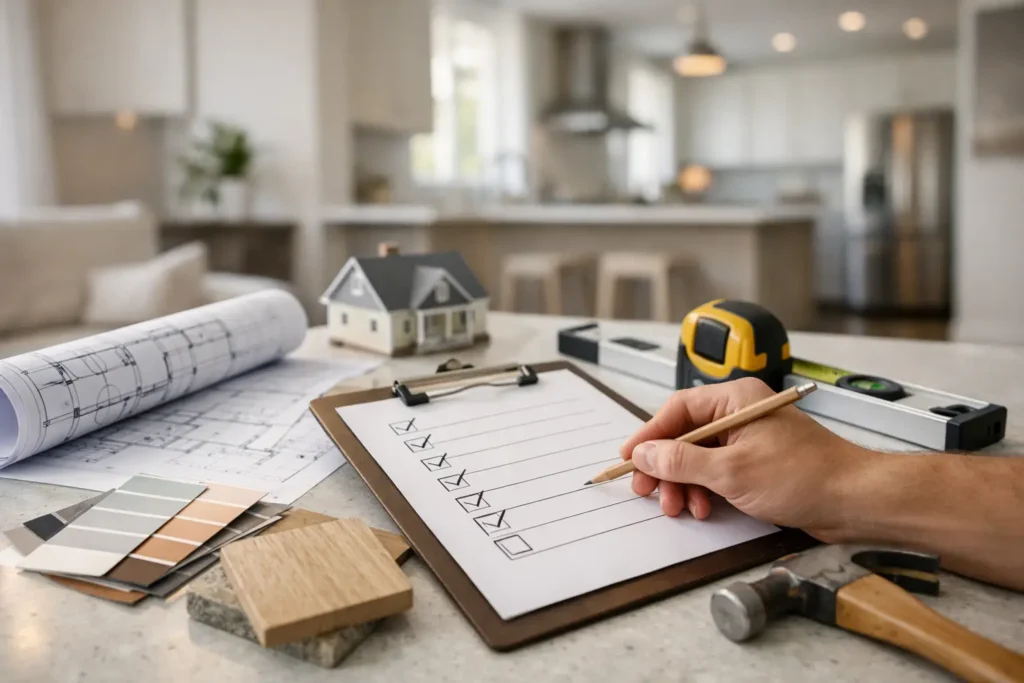
A whole-house renovation can go sideways fast. One delayed permit turns into a late demo. A late cabinet order pushes flooring. A missed plumbing detail opens a wall twice. That is why a solid full home remodel checklist matters before the first crew arrives.
When homeowners start a major remodel, they usually picture the finished kitchen, better storage, or a more open layout. What they do not always see at first is how many decisions affect cost, timing, and day-to-day stress. The goal of a checklist is not to make the process feel rigid. It is to help you stay in control.
Start your full home remodel checklist with the real goal
Before you talk finishes or paint colors, get clear on why you are remodeling. Some homeowners need more function for a growing family. Others want to fix outdated systems, improve flow, or raise property value before staying long term. Those goals shape every decision that follows.
A remodel built around resale may call for different choices than one designed for a forever home. If you plan to age in place, accessibility matters now, not later. If your home has layout problems, cosmetic upgrades alone may not be enough. This early step helps prevent spending money in the wrong places.
Set a budget with room for the unknown
One of the biggest mistakes in a full remodel is setting a budget that only covers the visible work. Flooring, cabinets, tile, and fixtures are easy to picture. Hidden conditions are not. Once walls are opened, contractors may find outdated wiring, water damage, framing issues, or old plumbing that needs to be replaced.
A practical budget includes the project cost, temporary living expenses if needed, permit fees, design costs, and a contingency fund. For a full home remodel, that backup cushion matters. A clean, newer home may need less flexibility. An older property usually needs more.
If budget limits are tight, be honest early. It is better to scale scope before construction starts than to make rushed cuts in the middle of the job.
Decide what stays and what changes
This is where your checklist becomes specific. Walk through the house room by room and note what will be kept, repaired, removed, or rebuilt. Think beyond surface finishes. Look at walls, doors, windows, lighting, plumbing locations, storage, and traffic flow.
Some homeowners benefit from a full reset. Others can save money by keeping certain layouts in place. Moving kitchens and bathrooms often increases cost because plumbing, electrical, and ventilation work become more involved. Sometimes the best value comes from improving function without relocating everything.
A clear scope also helps contractors price the work accurately. Vague plans often lead to vague pricing.
Build the right team early
A full home remodel involves more than one trade, and coordination makes a huge difference. Depending on the project, you may need a general contractor, designer, architect, structural engineer, and specialty subcontractors. The bigger the scope, the more project management matters.
Look for a contractor who communicates clearly, explains trade-offs, and gives realistic timelines. Fast promises are tempting, but reliability is more valuable than optimism that does not hold up once work begins.
This is also the time to ask who will handle permits, inspections, scheduling, and material coordination. Homeowners should not have to chase every moving part on a major remodel.
Confirm plans, drawings, and permits
A remodel should not begin with rough ideas scribbled on paper. Finalized plans reduce confusion, change orders, and delays. If your project includes structural changes, additions, wall removal, garage conversion, basement finishing, or major system updates, detailed drawings are especially important.
Permits matter too. Skipping them may seem faster at first, but it can create expensive problems later when you sell, refinance, or insure the property. In many Los Angeles homes, permit and inspection requirements can be a real factor in timeline planning, especially for structural and electrical work.
Your checklist here is simple. Make sure plans are approved, permit responsibility is clear, and the construction schedule accounts for inspection windows.
Choose materials before demo starts
Selections made late tend to cost more. They also slow down the job. Cabinets, windows, doors, specialty tile, custom vanities, and appliances often have longer lead times than homeowners expect.
Try to finalize the major items before demolition begins. That includes flooring, cabinetry, countertops, plumbing fixtures, lighting, hardware, paint, trim style, and appliances. You do not need to obsess over every detail on day one, but the big decisions should be settled early enough to support the build schedule.
This is one of the most overlooked parts of any full home remodel checklist. Good planning here can save weeks.
Plan for living arrangements and daily disruption
A full remodel affects more than the house. It affects your routine, sleep, pets, storage, cooking, and privacy. If kitchens and bathrooms will be offline for long periods, decide whether you will live through the project or move out temporarily.
Neither option is right for everyone. Staying in the home may save money, but it can add stress and slow certain phases of work. Moving out can make construction faster and cleaner, but it adds another cost. It depends on the scale of the remodel, the size of your household, and how much of the home will be under construction at once.
Also think through parking, access, deliveries, dust control, and where furniture or valuables will go. Small logistics become big frustrations if they are ignored.
Make your checklist cover systems, not just finishes
Homeowners naturally focus on what they can see, but full remodels are often the best time to improve what sits behind the walls. If the house is older, ask whether electrical panels, wiring, plumbing lines, insulation, HVAC equipment, ductwork, or windows should be updated while access is open.
These upgrades are not always exciting, but they often improve safety, efficiency, and long-term value. They can also prevent future tear-out. Replacing a wall finish now and reopening it next year for old plumbing is a painful way to spend money twice.
This does not mean every system must be replaced. It means each one should be evaluated with the overall project in mind.
Prepare for the construction phase
Once the contract is signed and materials are ordered, your checklist should shift from planning to execution. Confirm the start date, payment schedule, work hours, site protection plan, and communication process. Know who your point of contact is and how updates will be shared.
You should also review what triggers a change order. Changes happen on many remodels. The issue is not whether they occur. The issue is whether they are documented clearly with cost and schedule impact before extra work begins.
A good contractor keeps this part organized. That helps homeowners make decisions with confidence instead of reacting under pressure.
Use a full home remodel checklist for punch list and closeout
The end of a remodel is exciting, but it still needs structure. As the project wraps up, walk the home carefully and create a punch list of incomplete items, touch-ups, hardware adjustments, paint corrections, and any finishing details that need attention.
You should also collect final permits if applicable, inspection sign-offs, warranty information, product manuals, care instructions, and any leftover materials worth keeping, such as extra tile, flooring, or paint.
Before final payment, make sure the scope is complete and the home is ready for turnover. This is not about being difficult. It is about closing the project properly.
What homeowners often miss
The most common remodel problems are rarely dramatic design mistakes. More often, they are planning gaps. Homeowners underestimate lead times. They assume every finish will be in stock. They leave decisions open too long. Or they hire based on the lowest price without looking closely at communication, scope detail, and project management.
A strong checklist protects you from that. It keeps the remodel grounded in real numbers, realistic timing, and better decision-making. It also gives your contractor a better roadmap, which usually leads to a smoother build.
If you are thinking about a whole-house renovation, take the time to plan it the right way from the start. And if you want a team that values craftsmanship, clear communication, and honest pricing, contact Greenwood Contractors for a free estimate.