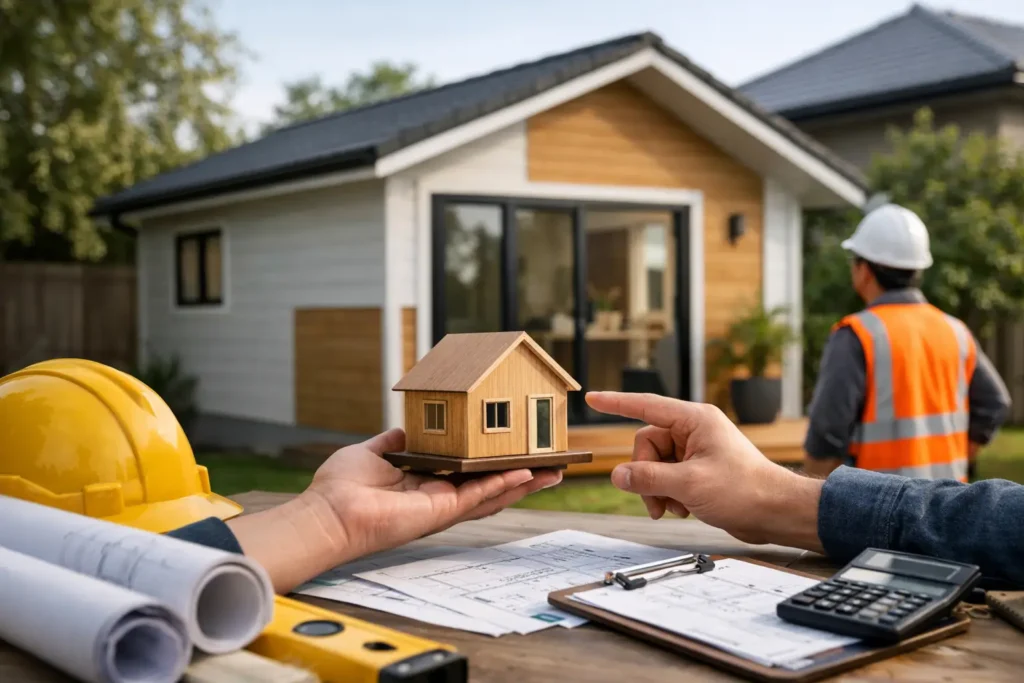
If you are searching for how to build an ADU, you are probably not looking for vague advice. You want more space, more flexibility, and a clear path from idea to finished build. Maybe you need a private place for family, a rental unit for added income, or a smart way to make better use of your property. Whatever the reason, an ADU can be a strong investment when it is planned well from the start.
An accessory dwelling unit is a small independent living space built on the same lot as a primary home. It can be a detached backyard unit, a garage conversion, a basement apartment, or an addition attached to the house. The right option depends on your lot, your budget, local zoning, and how you plan to use the space.
How to build an ADU starts with the right goal
Before you think about finishes or floor plans, get clear on the purpose of the project. That choice affects almost everything that follows. A rental ADU may need a layout that maximizes privacy and durability. A unit for aging parents may need wider doorways, fewer steps, and a simpler bathroom design. A guest house may allow more flexibility with size and amenities.
This is also the point where many homeowners either save money or create future problems. Building too small can make the space hard to use. Building too large can push your budget higher than expected and trigger more design and permit challenges. The goal should be a unit that fits real needs, not just a sketch that looks good on paper.
Check zoning, setbacks, and local ADU rules
The next step in how to build an ADU is confirming what is actually allowed on your property. This is where reality sets the boundaries. Every city has rules about lot coverage, height limits, parking, setbacks, utility connections, and whether you can build attached or detached.
In Los Angeles, ADU rules have become more favorable in recent years, but that does not mean every lot is simple. Hillside properties, older garages, narrow access paths, and utility upgrades can all affect what is possible. Some homeowners assume they can convert any garage or place a detached unit anywhere in the backyard. That is not always the case.
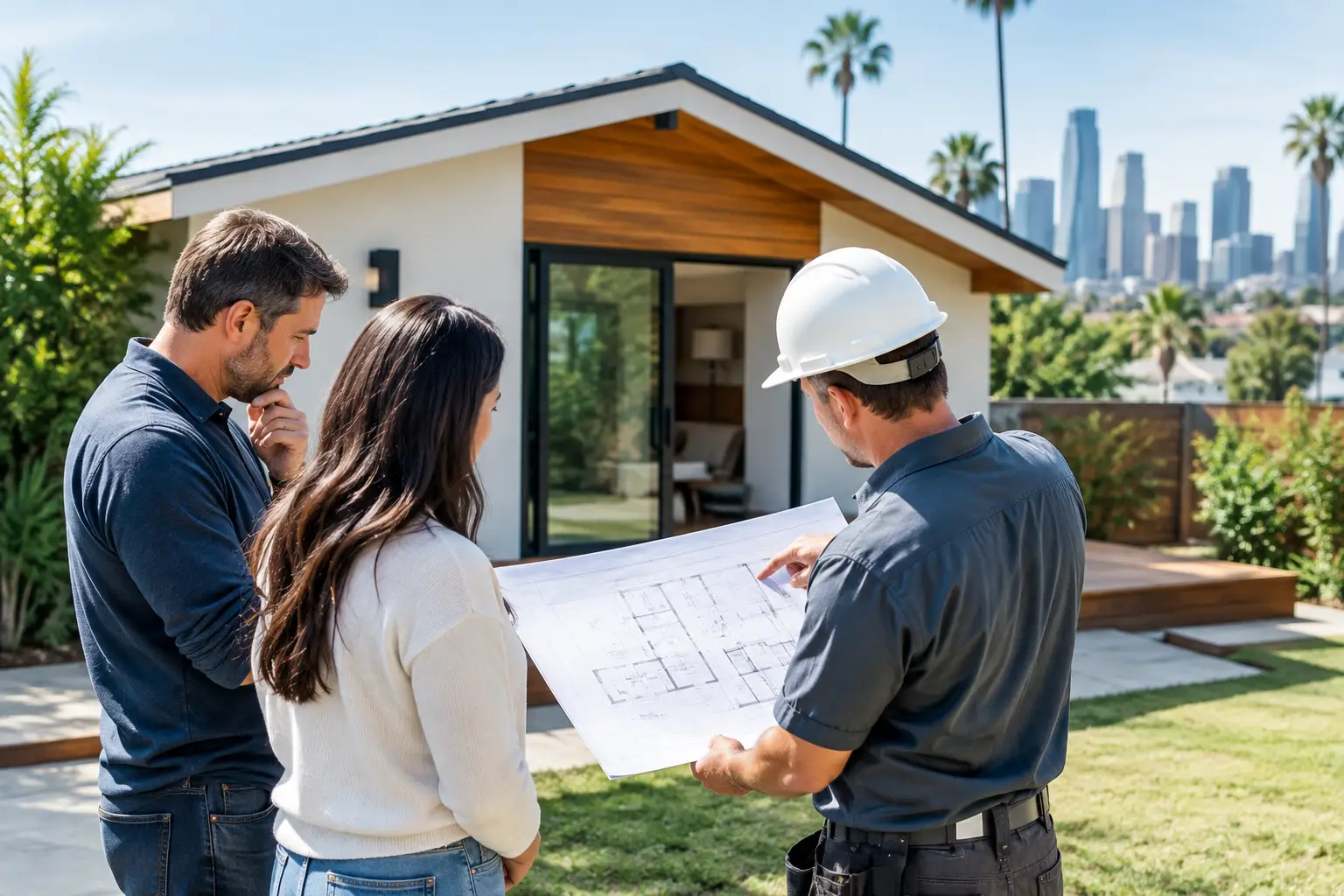
A good contractor or design-build team can help review your property early and spot issues before you spend money on plans that will need major revisions. That kind of early honesty matters. It keeps a project moving and protects your budget.
Set a budget that covers the real project
One of the biggest mistakes homeowners make is budgeting only for construction. An ADU project usually includes design, engineering, permits, site prep, utility work, finishes, and inspection costs. If your property needs sewer upgrades, electrical panel work, or foundation repairs, those costs can add up quickly.
That does not mean an ADU is not worth building. It means your budget should be realistic from day one. A garage conversion may cost less than a detached new build, but it may still require insulation, structural upgrades, plumbing, windows, and a complete interior rebuild. A detached ADU gives more privacy and flexibility, but usually costs more per square foot.
There is no one-size-fits-all price. The smartest approach is to decide what you can comfortably invest, then shape the scope around that number. A reliable contractor will help you understand where to spend, where to simplify, and which features are worth the added cost.
Choose the right type of ADU for your property
When homeowners ask how to build an ADU, they often picture one version without realizing there are several ways to get there. The best choice depends on your lot, timeline, and long-term goals.
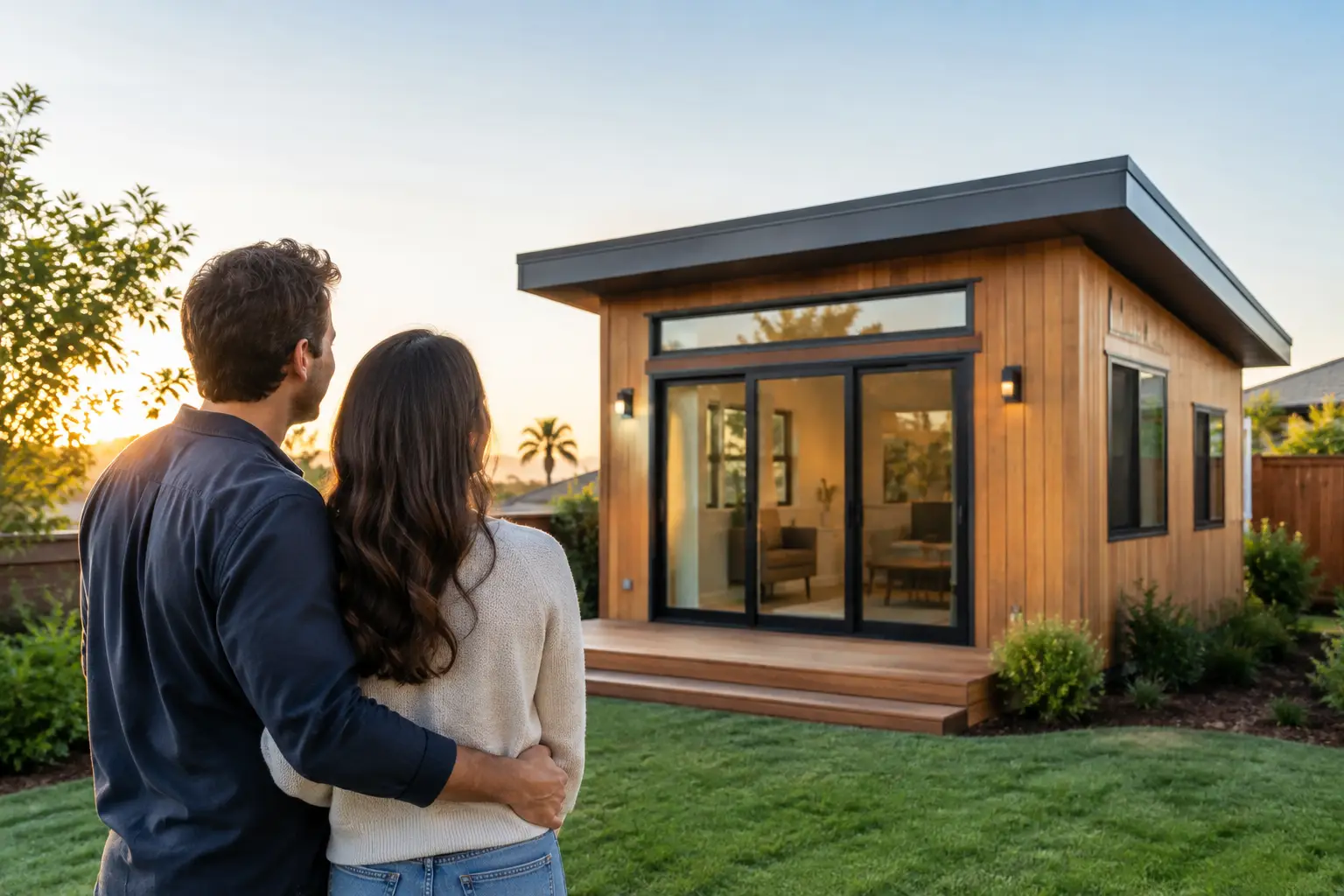
A detached ADU offers the most privacy. It often works well for rental income or multigenerational living because it feels more independent. The trade-off is cost. You are usually building a full structure from the ground up, which means more site work and more materials.
An attached ADU can be a good option if your home has room for an addition. It may simplify utilities and reduce some construction costs, but it can also require more careful planning to preserve privacy between the main home and the unit.
A garage conversion is popular because the shell is already there. That can shorten the timeline and lower costs, but only if the existing garage is in good shape. Older garages often need structural and foundation improvements before they are ready to become living space.
A basement or interior conversion can work well in some homes, but only when ceiling height, access, ventilation, and code requirements can be met. What looks simple at first can become complicated fast.
Build the layout around livability
A good ADU is not just small. It is efficient, comfortable, and easy to live in. That comes down to design.
Open layouts usually make the space feel larger. Natural light matters more than most people expect. Window placement, ceiling height, and storage all have a big impact on how the finished unit feels. A cramped floor plan with too many walls can make a brand-new ADU feel dated on day one.
The kitchen and bathroom deserve special attention. These are the areas that drive function, value, and daily comfort. You do not need luxury materials everywhere, but you do need durable finishes and a layout that makes sense. It is better to build a simple kitchen that works well than a fancy one that crowds the room.
If the ADU is for older family members, accessibility should be part of the plan from the start. A curbless shower, wider doorways, better lighting, and easy entry can make the space safer and more usable for years.
Permits and plans are not the place to cut corners
Permits can feel slow, but unpermitted work creates much bigger problems. If you skip the proper process, you can run into failed inspections, fines, delays in selling the property, and insurance issues later.
This part of how to build an ADU takes patience. Plans usually need to include architectural drawings, structural details, energy compliance, and site information. Depending on the property, there may also be grading, drainage, or utility requirements.
The smoother path is working with professionals who know how to prepare plans properly and respond to city comments quickly. Fast turnaround does not come from rushing. It comes from getting the details right early.
Hire a contractor who can manage the whole build
The difference between a stressful ADU project and a well-run one often comes down to project management. Homeowners need clear communication, a realistic schedule, clean job sites, and straightforward pricing. If a contractor is vague before the job starts, that usually does not improve once construction begins.
Ask how the company handles permits, scheduling, inspections, change orders, and material selections. Ask who will be your point of contact. Ask how they deal with surprises behind walls or under slabs. Good contractors do not promise that nothing will go wrong. They explain how they handle problems when they come up.
That practical mindset matters because ADUs often involve unknowns. Utility lines may need rerouting. Soil conditions may change foundation work. Existing structures may not meet current code. The right team keeps those issues from turning into chaos.
Expect trade-offs and make smart choices
Every ADU project has competing priorities. You may want the largest unit allowed, the best finishes, and the lowest possible cost. Usually, you can optimize for two, not all three.
That is why planning matters so much. Sometimes it makes sense to reduce square footage slightly to preserve yard space or avoid expensive site work. Sometimes it is worth spending more on insulation, windows, or HVAC because those upgrades improve comfort and efficiency long after construction is done. Sometimes the best move is delaying optional upgrades until phase two.
There is no perfect ADU formula. The right solution is the one that fits your property, your budget, and the way you plan to use the space.
How to build an ADU that adds long-term value
A successful ADU should do more than pass inspection. It should feel like a natural extension of your property and hold up well over time. That means using quality materials, paying attention to drainage and waterproofing, and making design choices that age well.
It also means thinking past move-in day. Will the unit be easy to maintain? Will the layout still work if your needs change? Could it serve as a rental now and family housing later? Those questions help guide better decisions during design and construction.
Building an ADU is a major project, but it does not have to be overwhelming. With the right plan and the right team, it can be one of the most useful improvements you make to your home. If you are ready to talk through your options, contact Greenwood Contractors for a free estimate and honest guidance on the best path for your property.