A crack in a foundation can be easy to ignore until it grows, leaks, or starts affecting doors and floors inside the home. Knowing how to inspect foundation cracks gives you a clearer picture of what you are seeing and helps you act before a small concern becomes a costly structural repair.
Not every foundation crack means your home is unsafe. Concrete naturally shrinks as it cures, and minor settling is common in many homes. The key is to look at the crack’s size, direction, location, and whether it is changing over time. A careful inspection can help you separate a cosmetic issue from a problem that deserves prompt professional attention.
Start With Safety and Simple Preparation
Foundation inspections are usually straightforward, but safety comes first. Do not enter a crawl space with standing water, exposed wiring, strong odors, unstable soil, or signs of pests. Avoid leaning ladders against damaged walls or digging around the foundation yourself. If a wall looks bowed, shifted, or close to failing, keep your distance and call a qualified professional.
Choose a dry day with good daylight. Bring a flashlight, tape measure, pencil, notebook or phone, and a camera. A small ruler is helpful for measuring crack width. Wear closed-toe shoes and gloves if you will be walking around landscaping, a crawl space entrance, or unfinished basement areas.
Before you begin, clear away loose leaves, mulch, stored items, and other materials that block your view. You do not need to remove shrubs or excavate soil. You simply need to see as much of the exposed foundation as possible.
How to Inspect Foundation Cracks From Outside
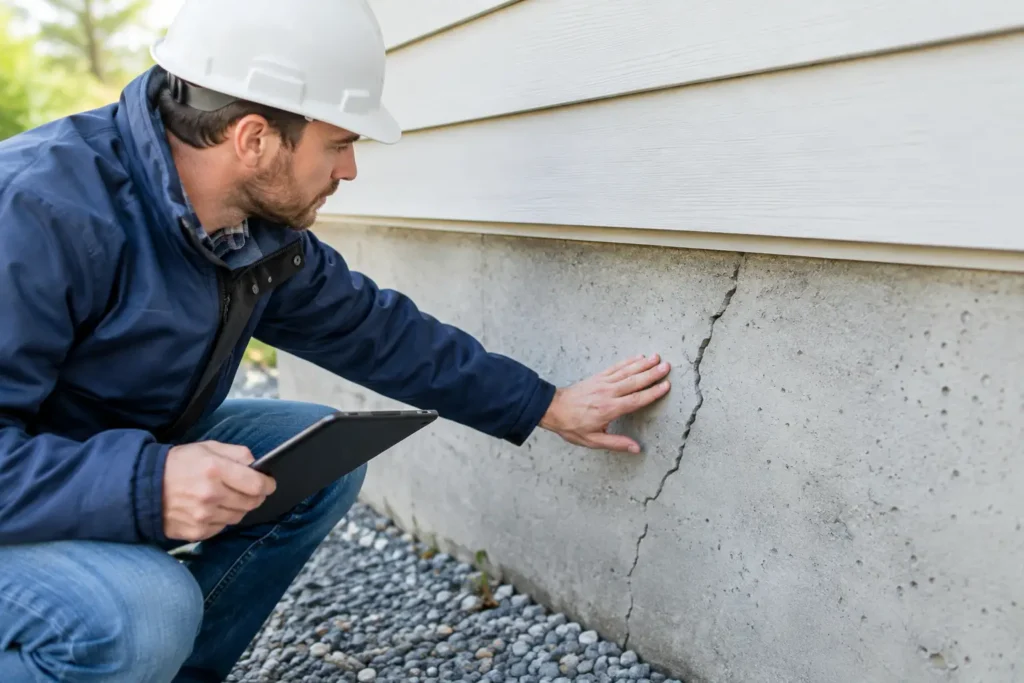
Walk slowly around the entire exterior of the home. Check poured concrete walls, block walls, stem walls, brick veneer, and the areas where porches, garages, additions, or patios meet the house. Cracks near corners, windows, doors, and utility openings deserve a closer look because these locations can experience more stress.
Take a photo of every crack you find. Include one wider photo to show its location and one close-up photo with a ruler or coin for scale. Write down the date, the crack’s location, estimated length, width, and shape. This record matters because movement over time is often more telling than the crack alone.
Pay attention to drainage while you inspect. Downspouts should direct water away from the foundation, and the soil should slope away from the house. Water that repeatedly collects along a foundation can soften soil, increase pressure against basement walls, and worsen existing cracks. Correcting drainage will not solve every structural issue, but it can prevent water from adding to the problem.
Cracks That Are Often Less Concerning
Thin vertical or diagonal hairline cracks in poured concrete are often related to normal curing or minor settling. These cracks may be cosmetic, especially if they are narrow, dry, and have not changed. A crack that is less than about 1/8 inch wide is not automatically harmless, but it is usually a good candidate for monitoring rather than panic.
Small cracks in a garage slab or driveway are also common. Slabs are exposed to temperature changes, soil movement, and vehicle loads. Still, note any crack that is widening, creating an uneven edge, or allowing water to reach areas below the slab.
Warning Signs Outside the Home
Some crack patterns call for a professional opinion sooner rather than later. Horizontal cracks in a basement or retaining wall can indicate soil pressure pushing inward. Stair-step cracks in concrete block or brick can point to uneven settlement. Wide diagonal cracks that extend from corners of doors or windows may also signal movement.
Look for more than the crack itself. A wall that bulges inward, leans, or has sections that appear offset is a serious concern. Gaps between an exterior wall and trim, separation where an addition meets the original home, or brick that is pulling away from the structure should also be evaluated.
Inspect the Basement, Crawl Space, or Interior Walls
Next, inspect the inside of the home. In an unfinished basement, use a flashlight to check the full foundation wall from floor to ceiling. Look behind stored boxes, shelving, insulation, and finished wall coverings when access allows. Moisture stains, peeling paint, white powdery residue, and moldy odors can show that water is entering through or near a crack.
In a finished basement, watch for new drywall cracks, separated baseboards, damp carpet, warped flooring, or doors that suddenly rub or will not latch. These signs do not prove there is foundation movement, but they can support what you find outside.
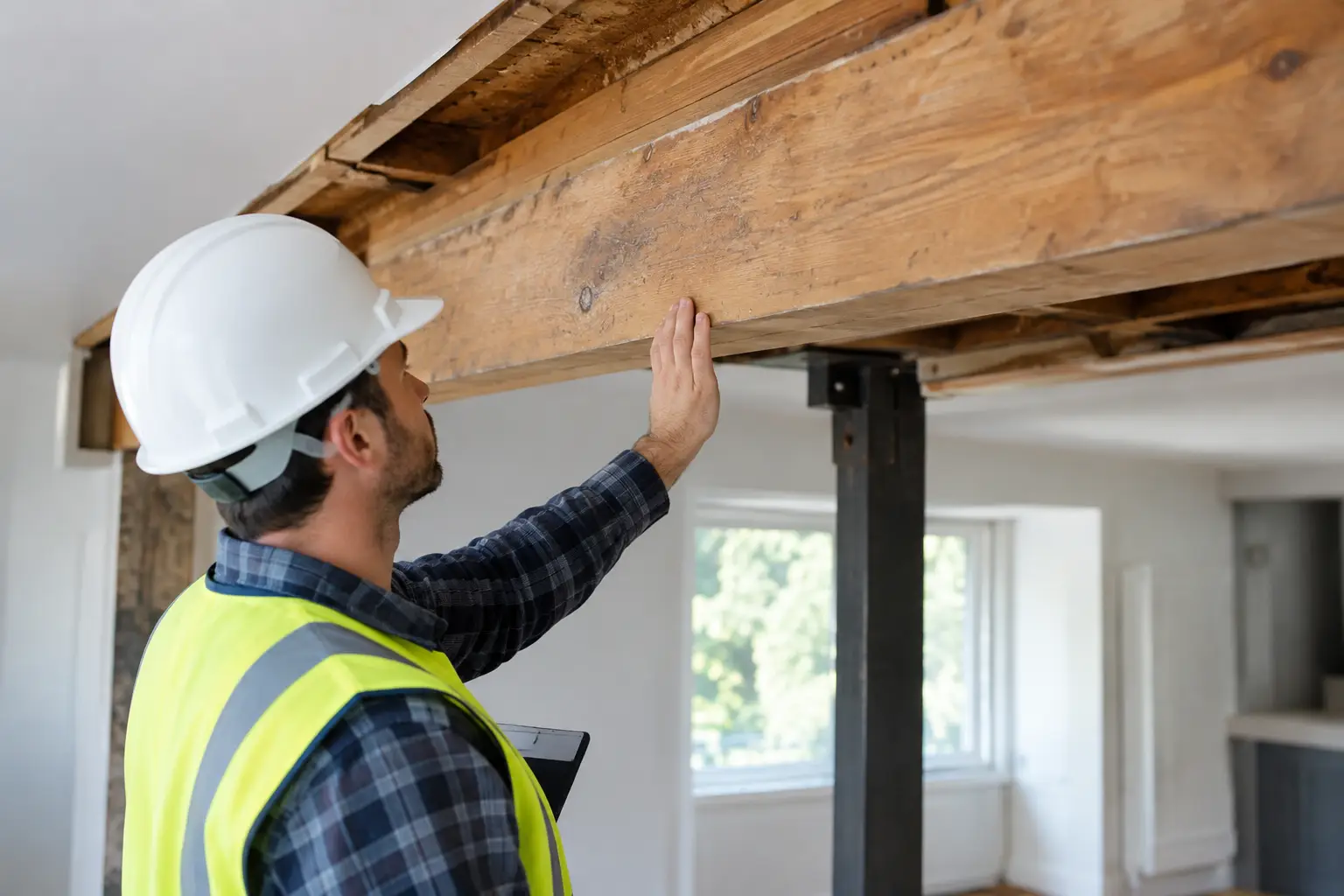
Crawl spaces require extra care. If access is safe, inspect visible piers, beams, sill plates, and foundation walls. Look for wet soil, standing water, damaged wood, sagging insulation, or gaps where framing meets the foundation. Do not disturb support posts, shims, or structural components. What looks like a simple adjustment may be part of a carefully designed support system.
Measure the Crack and Track Changes
A single inspection is useful. Rechecking the crack is even more useful. Measure its widest point and mark each end lightly with a pencil if the surface allows. You can also place a piece of painter’s tape next to the crack and write the date and measurement on it.
Reinspect after heavy rain, a long dry spell, or seasonal changes. Soil expands when wet and contracts when dry. In some areas, those cycles can affect foundations and slabs. Take photos from the same angle each time so changes are easier to compare.
Call for an evaluation if a crack becomes wider or longer, develops a new branch, begins leaking, or is joined by other signs such as sticking doors, sloping floors, or wall movement. A repair professional can identify whether the issue is surface-level, related to drainage, or connected to settlement and structural support.
Know When a Crack Needs Prompt Attention
You do not need to diagnose the foundation yourself. Your job is to observe carefully and bring in help when the signs are beyond a simple cosmetic crack. Contact a qualified contractor or structural professional promptly if you see any of the following:
- Horizontal cracks, bowing walls, or walls that appear to lean inward
- Cracks wider than about 1/4 inch, especially when they are growing
- Stair-step cracks in masonry or deep diagonal cracks near openings
- Water entering through a crack or repeated moisture along a foundation wall
- Uneven floors, persistent door and window problems, or gaps around trim
- Settlement around the home, including sunken areas near the foundation
The right next step depends on the cause. Some homes need improved grading, gutters, downspout extensions, or waterproofing. Others may need crack repair, reinforcement, underpinning, or work to stabilize soil and structural components. Honest evaluation matters because the most expensive repair is not always the necessary one.
Avoid Common Inspection Mistakes
Do not fill or paint over a crack before documenting it. A cosmetic patch can make monitoring harder and may hide moisture or movement. Also, avoid assuming that every crack is “normal” because it is small. Location and pattern matter as much as width.
It is also wise not to delay an inspection because the home is older. Older homes can have long-standing, stable cracks, but they can also develop new movement due to drainage changes, nearby construction, plumbing leaks, or shifting soil. A recent change is worth checking, regardless of the home’s age.
Foundation concerns can feel stressful, especially when you are planning a remodel, finishing a basement, or preparing to sell. A clear inspection record takes the guesswork out of the first conversation and helps the right professional recommend practical next steps.
If you have found a crack that concerns you, contact Greenwood Contractors for a free estimate. Our team can help assess visible conditions, explain your options clearly, and provide dependable structural repair solutions for your home.