A wall stained by water is rarely just a cosmetic problem. By the time you are searching for a water damage wall repair contractor, the issue may already involve soaked drywall, damaged framing, hidden mold, or an active leak that still needs to be fixed.
That is why fast action matters. A small brown spot can turn into peeling paint, soft drywall, musty odors, and structural damage if the source is ignored. The good news is that wall damage from water can usually be repaired successfully when the work is handled in the right order by a contractor who knows what to look for.
What a water damage wall repair contractor actually does
Many homeowners assume wall repair starts with patching the damaged area and repainting. In reality, good repair work starts much earlier. A qualified water damage wall repair contractor first looks for the cause of the damage. That could be a roof leak, plumbing failure, shower pan issue, window leak, foundation moisture problem, or poor exterior drainage.
If the source is not corrected first, the wall will likely fail again. New drywall and fresh paint may look fine for a few weeks or months, but the moisture problem will come back. That is why experienced contractors focus on both the visible damage and the hidden conditions behind it.
Once the source is identified, the repair process may include opening the wall, removing wet materials, drying the area, replacing insulation, repairing framing if needed, installing new drywall, matching texture, and repainting. In some homes, the work is simple and contained. In others, especially after long-term leaks, the damage spreads farther than expected.
Signs the damage is more serious than it looks
Some water-damaged walls are easy to spot. Others stay hidden until the problem becomes expensive. A few warning signs deserve immediate attention.
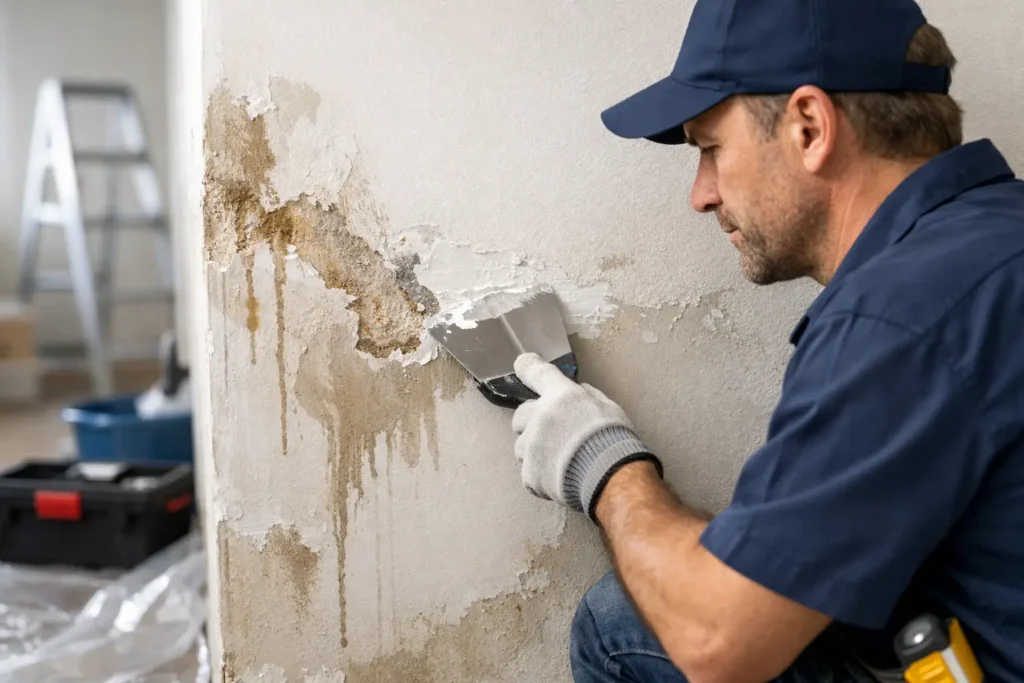
Discoloration is one of the most common clues. Yellow, brown, or copper-colored stains often point to ongoing moisture. Bubbling paint, peeling wallpaper, soft spots, or drywall that feels swollen are also signs that water has gotten behind the surface.
A musty smell matters too. If a room smells damp even when everything looks dry, moisture may still be trapped in the wall cavity. Cracks around trim, warped baseboards, and loose tile near wet walls can also suggest deeper issues.
It depends on how long the leak has been active. A one-time plumbing overflow may require limited wall repair. A slow leak behind a shower or window can damage studs, insulation, flooring, and nearby finishes before anyone notices.
When repair is enough and when replacement makes more sense
This is where honest contractor guidance matters. Not every damaged wall needs full replacement, but not every stain can be covered with primer and called fixed either.
If moisture exposure was brief and the wall dried quickly, repairs may be limited to a small section. If drywall has softened, crumbled, or grown mold, replacement is usually the safer choice. The same goes for insulation that has stayed wet. Once it loses its shape or traps moisture, it no longer performs the way it should.
Framing is a separate question. Wood studs and plates can sometimes be dried and preserved if damage is caught early. But if wood has rotted, split, or lost strength, partial structural repair may be needed. That is especially important around load-bearing walls, window openings, and areas near bathrooms or exterior walls.
A dependable contractor will explain the trade-offs clearly. Spot repair may save money upfront, but broader replacement can be the better long-term value if the surrounding materials are already compromised.
What affects the cost of wall water damage repair
Homeowners understandably want a quick number, but costs vary because water damage is not one problem. It is a chain of problems. The final price depends on what caused the damage, how far it spread, and what materials need to be restored.
A small drywall repair from a known plumbing leak will cost far less than opening a large exterior wall with damaged insulation, framing, trim, and paint. Texture matching can also affect labor, especially in older homes where finishes are harder to blend. If cabinetry, tile, flooring, or electrical components are involved, the scope grows fast.
Accessibility matters too. Repairs behind built-ins, around stairwells, or in finished basements can take more time. If mold remediation or structural work is needed, the project becomes more specialized.
The best estimates are detailed, not vague. You want to know what is included, what may change once the wall is opened, and how the contractor handles hidden damage if it is discovered during demolition.
How to choose the right contractor for the job
Not every contractor approaches water damage the same way. Some focus on surface repairs. Others understand how moisture moves through a building and why lasting results depend on finding the full extent of the problem.
Look for a contractor who asks good questions before giving quick answers. They should want to know when the damage appeared, whether the leak is active, what rooms are affected, and whether there have been previous repairs in the same area. That kind of conversation usually signals experience.
You also want clear communication. A good contractor explains the likely repair sequence, possible complications, expected timeline, and finish options. They should be straightforward about what can be matched and where there may be minor differences, especially with older paint or heavy wall texture.
Cleanliness and responsiveness matter more than people think. Water damage repairs often happen in lived-in homes. You want a team that protects nearby surfaces, keeps dust under control, and respects your schedule. Fast turnaround helps, but not if it comes at the expense of proper drying and careful workmanship.
For property owners in Los Angeles, that local familiarity can also help. Homes in the area vary widely in age, materials, and prior remodel quality. A contractor who understands those differences can often spot common moisture trouble areas faster.
The repair process homeowners should expect
A well-managed project feels organized from day one. First, the contractor assesses the damage and confirms the moisture source. If the leak is still active, that issue is handled before finish repairs begin.
Next comes controlled demolition. Damaged drywall, trim, or insulation is removed as needed so the wall cavity can be inspected. If drying equipment is necessary, the area may need time before rebuilding starts. Rushing this stage is one of the most common reasons repairs fail.
After the space is dry and sound, reconstruction begins. That may include framing repair, insulation replacement, new drywall installation, taping, finishing, texture matching, priming, and painting. The final step is cleanup and a walkthrough to make sure the repaired wall looks right and performs the way it should.
Some projects move quickly. Others take longer because hidden damage shows up once the wall is opened. That is normal. What matters is whether your contractor communicates clearly when the scope changes.
Why fast repairs still need careful workmanship
Water damage can make homeowners feel rushed, and for good reason. The longer moisture sits, the greater the risk of mold, rot, and finish failure. But speed alone is not the goal. Correct sequencing is.
A contractor who skips moisture checks, closes the wall too early, or patches over damaged material may save a day now and cost you weeks later. Good wall repair is not flashy. It is thorough. It solves the cause, removes what cannot be saved, rebuilds what matters, and leaves the space looking clean and finished.
That is the kind of repair work that protects your home and your budget.
If you are dealing with staining, soft drywall, peeling paint, or a wall that just does not look right after a leak, it helps to get an experienced opinion before the damage spreads. Contact Greenwood Contractors for a free estimate and get a clear plan for repairing the problem the right way.