A deck should make your backyard easier to enjoy, not add another demanding project to your weekend list. The right deck material options affect more than appearance. They shape your maintenance routine, long-term costs, comfort underfoot, and how well the space holds up to sun, rain, and daily use.
For most homeowners, there is no single best material. A busy family with a pool, a homeowner restoring a classic property, and an owner planning to sell in a few years may all make different smart choices. The goal is to match the deck surface to the way you live, the conditions around your home, and a budget that makes sense now and later.
Start With How You Will Use the Deck
Before choosing colors or board widths, think about the deck’s job. Will it be a small landing outside a back door, a dining area for weekend gatherings, or a large outdoor living space with a grill, pergola, and seating? Heavy foot traffic, pets, kids, pool water, and direct afternoon sun can all change which product is the right fit.
Also consider the structure below the boards. A beautiful surface cannot compensate for undersized framing, poor drainage, or improperly installed footings. If an existing deck feels bouncy, has visible rot, or shows loose connections, the framing should be inspected before a resurfacing project begins. Sometimes replacing the deck boards is practical. Other times, a full rebuild is the safer and more cost-effective answer.
The Main Deck Material Options to Compare
Pressure-Treated Wood
Pressure-treated lumber remains one of the most common choices because it is accessible and budget-friendly upfront. It can be painted or stained, which gives homeowners flexibility with color. When properly maintained, it can provide years of dependable service.
The trade-off is maintenance. Wood needs regular cleaning, sealing, and staining or painting to limit moisture damage, checking, splinters, and fading. Boards can also move as they dry, especially in areas with strong sun and changing temperatures. This option works well for homeowners who want the natural character of wood and do not mind keeping up with its care.
Not all pressure-treated boards are equal. Board quality, moisture content, fastener selection, and installation details matter. Proper gaps between boards and good ventilation beneath the deck help water drain and reduce long-term problems.
Cedar and Redwood
Cedar and redwood offer a warmer, more refined natural look. They are naturally more resistant to insects and decay than many untreated woods, and they tend to stay cooler under bare feet than some synthetic materials. Their grain and color can make a simple deck feel custom.
These woods still need care. Sun exposure can turn them gray, while water exposure can lead to surface wear if the boards are not sealed. They also cost more than standard treated lumber, and prices can vary based on grade and availability.
Cedar or redwood may be a strong choice if real wood is a priority and you are prepared to maintain it. A quality stain can preserve the appearance while allowing the natural grain to show through.
Composite Decking
Composite decking is made from a blend of wood fibers and plastic materials. It has become a popular option for homeowners who want a clean, consistent appearance with less maintenance than wood. Most composite boards resist rot, insects, and splintering, and they do not require routine staining or sealing.
The higher initial price is the main consideration. Composite can also get hot in direct sunlight, particularly in darker colors. This matters in Los Angeles-area yards where a deck may receive intense afternoon sun. Lighter board colors, shade structures, and product selection can make a meaningful difference in comfort.
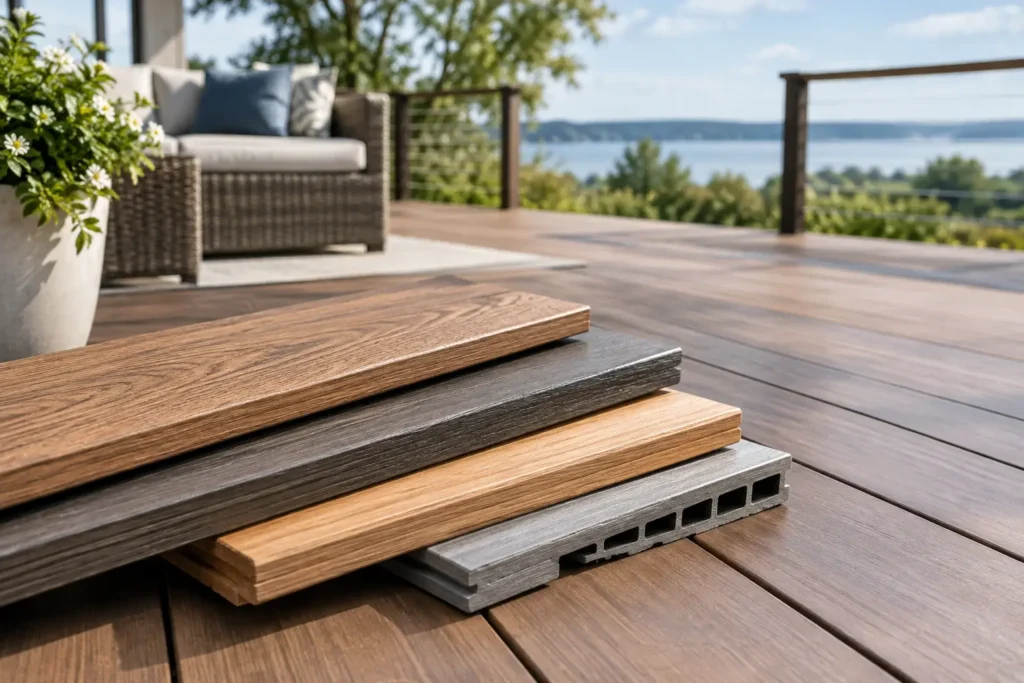
Composite is available in a wide range of colors and grain patterns. Some products have a more realistic wood look than others, so it helps to view full-size samples outside rather than choosing from a small swatch. For a homeowner who wants low ongoing upkeep and a polished appearance, composite often provides strong long-term value.
PVC Decking
PVC decking is made primarily from plastic, without wood fibers. That makes it highly resistant to moisture, mold, and insects. It is a practical fit near pools, in damp locations, or on decks where water exposure is a constant concern.
Like composite, PVC costs more at the start than conventional lumber. Its appearance has improved significantly, but some homeowners still prefer the texture and variation of real wood. It can also expand and contract with temperature changes, so installation needs to follow the manufacturer’s spacing requirements closely.
If minimal maintenance and high moisture resistance are the priorities, PVC deserves serious consideration. It is especially useful when the deck will see frequent splashing, wet towels, or shaded conditions that stay damp longer.
Aluminum Decking
Aluminum is less common for residential decks, but it solves specific problems well. It is strong, noncombustible, insect-resistant, and not vulnerable to rot. Many aluminum systems are designed to channel water away, making them useful for elevated decks with a dry patio or storage area below.
The look is more modern and industrial than wood or composite. It may also produce more sound underfoot during rain or when objects are dropped. Aluminum is generally a premium investment, but it can be an excellent choice for homeowners who need exceptional durability and drainage performance.
Cost Means More Than the Installation Price
A low upfront price can be appealing, especially on a large deck. But the better question is what the deck will cost over the next 10 to 20 years. Wood often costs less to install, then requires periodic cleaning, refinishing, and occasional board replacement. Composite, PVC, and aluminum usually cost more initially but reduce the work and expense of ongoing surface maintenance.
There is also the cost of your time. If sealing a deck every few years sounds satisfying, natural wood may be the right fit. If you would rather spend weekends using the space, a low-maintenance material may justify the higher initial investment.
Ask for a clear estimate that separates structural work, decking, railings, stairs, permits, demolition, and disposal. This makes it easier to compare proposals fairly. A low bid may leave out important details such as upgraded hardware, flashing, or repairs to the existing frame.
Color, Heat, and Safety Matter
Deck color affects more than curb appeal. Dark boards can become much hotter in direct sun. Lighter colors typically feel more comfortable, though they may show dirt or food spills more easily. Textured boards can offer improved traction, which is valuable near pools, outdoor kitchens, and entry doors.
Railings deserve the same attention as the deck boards. They need to meet local code requirements and should fit the style of the home. Wood, metal, cable, glass, and composite railing systems all create a different look and maintenance level. If the deck is elevated, safe railings and properly built stairs are not optional details.
Lighting is another practical upgrade. Step lights, post lights, and low-voltage perimeter lighting can make the deck easier to use after sunset while improving visibility around stairs and changes in elevation.
Choose the Material With the Whole Project in Mind
The best deck surface should work with your home’s architecture, your outdoor plans, and the condition of the structure beneath it. A modest treated-wood deck can be a smart, attractive project when it is built correctly. A premium composite or PVC deck can be worthwhile when low maintenance and consistent appearance are the priorities.
Avoid choosing based on a single display board or the first installation price alone. Look at samples in daylight, ask about warranty coverage, and make sure the proposed material is compatible with your framing and fastening system. Good planning at this stage prevents expensive changes once construction is underway.
A well-built deck gives your home more usable space and creates a place people naturally gather. For honest guidance on materials, design, and construction, contact Greenwood Contractors for a free estimate. We will help you build an outdoor space that fits your home and the way you want to live.