A kitchen can look clean on the surface and still feel frustrating every day. If pans are stacked three deep, groceries disappear in the back of cabinets, and countertops collect small appliances, the problem is usually not a lack of square footage. It is a lack of useful storage. The right kitchen storage upgrades make the room easier to cook in, easier to clean, and more comfortable for the whole household.
A storage-focused remodel does more than add cabinets. It puts everyday items where you need them, gives each category a clear home, and removes the small annoyances that make a kitchen feel outdated. For many homeowners, these practical improvements deliver more daily value than a decorative change alone.
Start With How Your Kitchen Actually Works
Before choosing pull-out shelves or a new pantry cabinet, look closely at your routine. Where do groceries land when you come home? Which drawers become cluttered first? Where do you prep meals, load the dishwasher, and make coffee each morning?
A good storage plan follows those answers. Cooking tools belong near the range. Food storage containers should be close to the refrigerator or prep area. Plates, glasses, and utensils should be convenient for both the dishwasher and the dining area. Small changes in placement can save dozens of unnecessary steps each week.
It also helps to identify what is taking up the most space. Large pots, baking sheets, countertop appliances, bulk purchases, pet food, and kids’ snacks all need different storage solutions. A cabinet layout that works well for a couple who cooks simple meals may not work for a busy family that shops in bulk and hosts often.
Measure the Frustration, Not Just the Walls
Traditional cabinet measurements matter, but so does accessibility. A deep lower cabinet may have plenty of cubic inches, yet much of it becomes wasted when you cannot see or reach what is in the back. Likewise, an oversized pantry with fixed shelves can become a collection point for expired cans and forgotten ingredients.
When planning improvements, note the items that require bending, digging, lifting, or moving other items out of the way. Those pain points are usually the best places to invest. Storage should reduce work, not simply hide more belongings behind closed doors.
Kitchen Storage Upgrades With the Biggest Impact
The most effective upgrades are often built into the cabinetry. They create a finished look while making better use of the space you already have.
Pull-Out Drawers in Base Cabinets
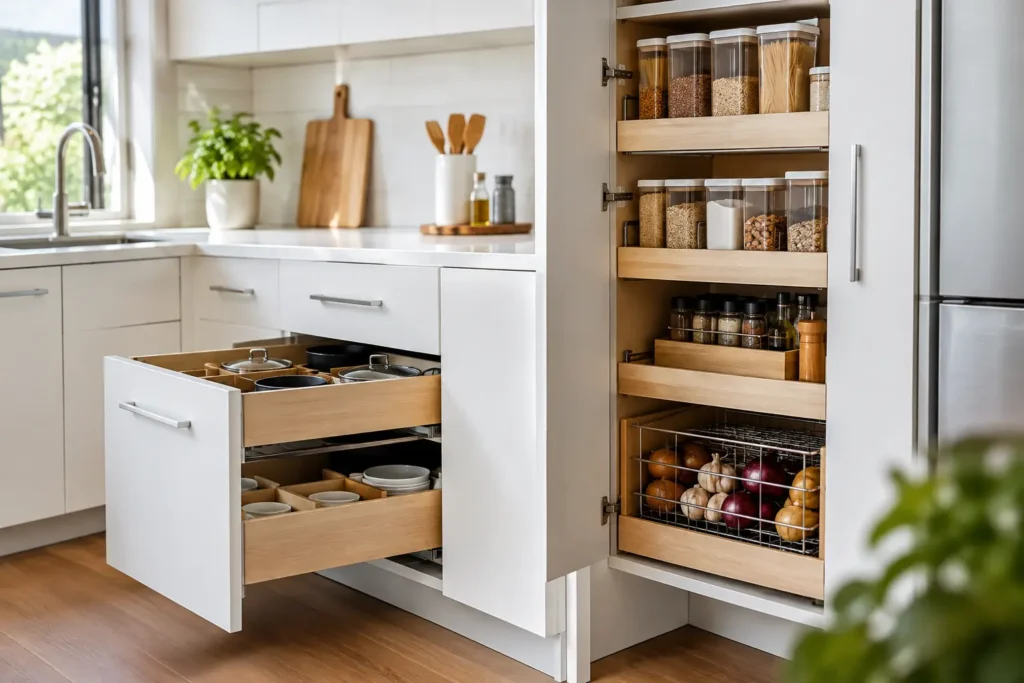
Deep drawers are one of the most useful replacements for standard lower cabinets. Instead of reaching into a dark space, you can pull the contents toward you and see everything at once. They are ideal for pots and pans, mixing bowls, small appliances, dry goods, and food containers.
Full-extension drawer hardware costs more than fixed shelves, but it is usually worth it in high-use areas. Quality hardware also matters. Drawers that glide smoothly and support a proper load will hold up better than inexpensive options that sag or stick over time.
A Drawer for Pots, Pans, and Lids
Stacking cookware can damage finishes and make a simple meal feel like a scavenger hunt. A deep drawer near the range gives heavy pots and pans a logical home. Add a lid organizer or adjustable divider, and you can keep matching pieces together without leaning lids against cabinet walls.
This upgrade is especially valuable for homeowners who cook frequently. If your kitchen has limited lower storage, prioritize the cabinet closest to the cooking zone.
Vertical Storage for Baking Sheets
Baking sheets, cutting boards, serving trays, and cooling racks are awkward in standard cabinets. A narrow vertical divider cabinet turns them into easy-to-grab items rather than a noisy stack that falls over each time you need one.
This feature does not need much width. It can often fit beside an oven, near a pantry, or at the end of a cabinet run. It is a small detail that makes a noticeable difference in a hardworking kitchen.
Pull-Out Trash and Recycling
A freestanding trash can takes up floor space and can interrupt the flow of the kitchen. A pull-out trash and recycling center keeps waste contained, convenient, and out of sight. The best location is usually near the primary prep area, not necessarily beside the sink.
Consider your household’s habits when choosing the number and size of bins. Families that recycle heavily may need two large containers. If composting is part of your routine, a smaller third bin can keep food scraps organized without crowding the counter.
Pantry Storage That Lets You See Everything
A pantry should make shopping and meal planning easier. Fixed, deep shelves often do the opposite. Pull-out pantry drawers, roll-out trays, and adjustable shelving help prevent food from getting lost behind larger items.
For a full kitchen remodel, a tall pantry cabinet with internal pull-outs can provide excellent storage in a compact footprint. A walk-in pantry may offer more capacity, but it takes more floor area and is not always the best choice for a smaller kitchen. The right answer depends on the room layout, your grocery habits, and whether you want storage hidden behind cabinet doors or open for quick access.
Make Drawers Work Harder
Kitchen drawers can become cluttered quickly without thoughtful organization. Built-in dividers give utensils, knives, spices, wraps, and serving tools a dedicated place. Unlike loose plastic trays, custom inserts can be sized to fit the drawer precisely and stay in place.
A utensil drawer near the dishwasher makes unloading easier. A separate shallow drawer for knives keeps blades protected and counters safer. A spice drawer beside the range lets you see labels at a glance. These may sound like small details, but they reduce the daily friction that makes a kitchen feel disorganized.
Do not assume every drawer needs a complicated insert. Simple adjustable dividers are often the more practical option because your needs may change over time. Flexibility is especially helpful in homes where children are growing, cooking habits are changing, or multiple people share the kitchen.
Use Corners and Tight Spaces Wisely
Corner cabinets can be useful, but they need careful planning. A basic blind corner cabinet often has storage that is difficult to reach. Pull-out corner systems and swing-out shelves can improve access, although they add cost and mechanical parts that may need occasional adjustment.
In some layouts, it is more practical to use the corner for less frequently used cookware and place your budget into better drawers elsewhere. Not every cabinet needs a premium organizer. Spend where it will solve a real problem.
Narrow spaces can also become useful. A slim pull-out beside the range may hold oils and spices. A shallow cabinet at the end of an island can store cookbooks, serving platters, or table linens. Even a few inches can become valuable when designed with a clear purpose.
Keep Countertops Clear Without Losing Convenience
Countertop appliances are convenient, but too many can make a kitchen feel crowded. An appliance garage, lift-up cabinet door, or dedicated cabinet shelf can store a toaster, blender, coffee maker, or stand mixer while keeping it accessible.
A mixer lift is a great option for homeowners who use a heavy stand mixer often. It reduces lifting and lets the appliance stay connected to power. However, it uses a valuable base cabinet, so it is best reserved for an appliance you truly use regularly.
Charging drawers are another practical addition. They keep phones, tablets, and cords off the counter while providing a central spot for household devices. If you choose this feature, use qualified professionals to ensure the electrical work is safe and properly installed.
Plan Storage During the Remodel, Not After
The best time to make storage decisions is before cabinets are ordered and installed. Retrofitting organizers later is possible, but it may limit your options and add unnecessary expense. During planning, bring a realistic list of what you need to store, including unusually large cookware, appliances, and pantry staples.
Good kitchen storage upgrades should also support the larger goals of your remodel. You may want more room for family meals, a better entertaining layout, improved accessibility, or a cleaner look that adds value to the home. Storage should serve those goals instead of becoming a collection of trendy features that do not fit your routine.
The most successful kitchens feel calm because every item has a place and every work area has room to function. If you are ready to build a kitchen that works harder for your household, contact Greenwood Contractors for a free estimate.