
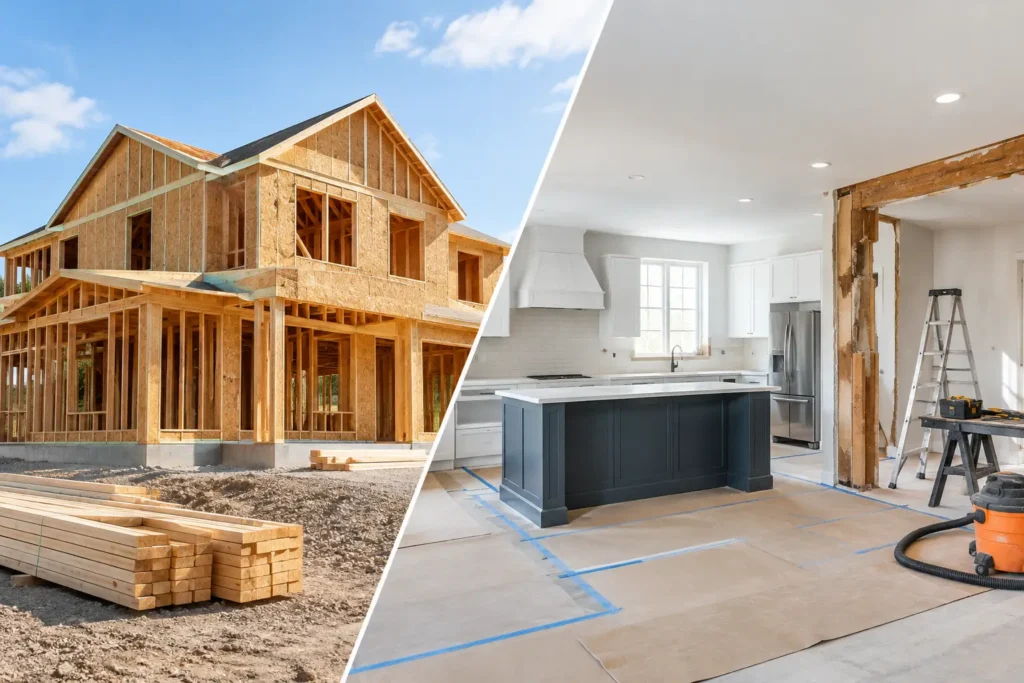
A house can feel too small, too dated, or too damaged long before it stops being home. When the needed changes are substantial, the decision often comes down to new construction vs major remodel. Both can create the space you want. The better choice depends on your home’s condition, your budget, your timeline, and how much of the existing structure is worth saving.
A major remodel may preserve the character and location you already love. New construction can give you a clean start with a layout built around the way you live now. There is no one-size-fits-all answer, but there is a smart way to compare the options before construction begins.
New Construction vs Major Remodel: Start With the House
The first question is not, “Which option costs less?” It is, “What are we working with?” A well-built home with a solid foundation, usable framing, and a layout that can be improved may be an excellent candidate for a major remodel. In that case, keeping the existing structure can make practical and financial sense.
But some homes have problems that go far beyond old finishes. Structural damage, extensive water intrusion, outdated electrical systems, failing plumbing, foundation movement, or a severely inefficient layout can change the equation. Once a remodel requires opening nearly every wall, replacing major systems, and rebuilding large portions of the structure, new construction may deserve serious consideration.
An experienced contractor can assess the visible condition of the property and identify questions that need further investigation. This early step helps prevent a common problem: choosing a remodel budget, then discovering that the home needs far more work than expected.
When a Major Remodel Is the Better Fit
A major remodel works well when the home has good bones and the changes can build on what is already there. It is often the right path for homeowners who value an established neighborhood, mature landscaping, or architectural details that would be difficult to recreate.
For example, a homeowner may want to rework a closed-off kitchen, expand a primary suite, finish a basement, update bathrooms, and replace outdated systems. That is a substantial project, but it does not always require starting from scratch. A thoughtful remodel can make the home feel completely different while retaining the parts that still serve you well.
Remodeling can also be a strong option when local zoning rules limit a home’s footprint or make a complete teardown more complicated. Keeping part of the existing structure may allow you to improve the property without triggering the same requirements as a brand-new build. Regulations vary by location, so permit requirements should be reviewed before a final decision is made.
The hidden-work factor
The challenge with a major remodel is that older homes can hold surprises behind the walls. Once demolition starts, crews may find damaged framing, old wiring, plumbing issues, or previous work that was not completed correctly. These conditions are not a reason to avoid remodeling. They are a reason to plan carefully and include a realistic contingency in the budget.
A clear scope of work, detailed allowances, and open communication matter greatly here. Homeowners should understand what is included, what may change if concealed damage is found, and how decisions will be handled during construction.
When New Construction Makes More Sense
New construction is often the better choice when the existing home cannot support the life you want to build around it. This may mean a complete teardown and rebuild, or a new detached structure such as an accessory dwelling unit, guest house, or backyard living space.
With a ground-up project, you have greater control over the floor plan, ceiling heights, storage, natural light, energy performance, and mechanical systems. You are not trying to fit modern needs into old walls. That freedom is valuable for growing families, multigenerational households, and property owners planning an ADU for rental income.
New construction can also reduce the uncertainty that comes with extensive demolition. The work still requires careful planning, permits, inspections, and site preparation, but the structure is designed as one coordinated system. Electrical, plumbing, HVAC, insulation, and framing can be planned together from the beginning.
That does not automatically make new construction easier or cheaper. A new home requires architectural plans, engineering, utility coordination, site work, foundation work, and full permitting. It can be a larger commitment upfront. The advantage is clarity: you know you are building a complete new structure rather than trying to predict every condition inside an older one.
Compare Costs by Scope, Not by Square Foot
Homeowners often search for a quick price comparison between new construction and remodeling. Square-foot estimates can provide a rough starting point, but they do not tell the full story. The real cost depends on design complexity, materials, site conditions, labor availability, permit fees, and the level of finish you choose.
A major remodel may cost less when much of the home remains intact. If you are keeping the foundation, exterior walls, roof structure, and utility connections, you are not paying to rebuild them from zero. On the other hand, a remodel can become expensive when the project involves structural changes, extensive system replacements, or difficult access in a tight property.
New construction has its own cost drivers. Demolition, grading, new utility connections, foundation work, and required code upgrades all add to the project. Yet it may provide better value when remodeling would mean rebuilding most of the house anyway. Spending wisely is not always about selecting the lower initial number. It is about choosing the option that delivers a durable, functional result without paying twice for temporary fixes.
Consider Timeline and Daily Life
Both options require patience. Major remodels can be especially disruptive because work happens inside the home you may still be living in. A kitchen remodel can limit meal preparation. A whole-home renovation may require temporary walls, dust control, utility shutoffs, and periods when parts of the house are unusable.
New construction can be less disruptive if you remain in the existing home while a detached ADU or separate structure is built. A teardown and rebuild is different. In that case, you will need to arrange temporary housing, move belongings, and plan for a longer period away from the property.
Permitting also affects timing. Los Angeles-area projects often require detailed review, and each property can present different zoning, grading, or utility considerations. Starting with accurate plans and a realistic construction schedule helps reduce preventable delays. No contractor can control every inspection or material issue, but a well-managed project should keep you informed at every stage.
Think Beyond the Project Finish Date
The right decision should serve you years after the final inspection. Consider how your household may change. Do you need a flexible home office, a first-floor bedroom, accessible bathrooms, more storage, or space for adult children or aging parents? A remodel can solve these needs when the structure allows it. New construction may be the better answer when you need a completely different layout.
Energy use is another long-term consideration. New construction makes it easier to incorporate current insulation standards, efficient windows, modern HVAC, and electrical capacity for future needs. A major remodel can also improve efficiency significantly, especially when walls, ceilings, and systems are already being opened or replaced.
Resale value matters, but it should not be the only driver. The goal is to create a home that works for your family and fits the neighborhood. Overbuilding for the area or choosing highly personal finishes can limit returns, while well-planned improvements tend to support both comfort and market appeal.
Make the Decision With Clear Information
Before committing to new construction or a major remodel, define what must change and what would simply be nice to have. Then evaluate the existing home honestly. A contractor should help you understand the likely scope, possible risks, permit path, and budget range before demolition or construction begins.
Ask how structural issues will be handled, how changes are documented, and who will manage the day-to-day work. Reliable communication is just as important as quality craftsmanship on a project of this size. You deserve straightforward answers, transparent pricing, and a plan that respects your home.
The best choice is the one that gives you a safe, functional home without forcing compromises you will regret later. Whether you are preserving a house with strong potential or building something entirely new, contact Greenwood Contractors for a free estimate.