A fire sprinkler requirement can change an ADU budget quickly. It may affect the water service, trenching, ceiling work, permits, and the overall construction schedule. So, do ADUs need sprinklers? Sometimes. The real answer depends on where the property is located, the type of ADU you are building, and the fire code your local jurisdiction enforces.
For homeowners, the best time to get a clear answer is before plans are finalized. A sprinkler requirement is manageable when it is planned early. It is far more frustrating when it appears during plan review after pricing and design decisions have already been made.
Do ADUs Need Sprinklers Under Local Code?
There is no single nationwide rule that answers the question for every accessory dwelling unit. Building and fire codes are adopted locally, and cities and counties can have different amendments, interpretations, and permit procedures. Your architect, designer, contractor, and local building department should all be working from the requirements that apply to your specific address.
In many areas, a newly constructed detached ADU may be treated as a new dwelling unit. That can trigger residential fire sprinkler requirements, especially when the jurisdiction follows a version of the International Residential Code or has adopted stricter local fire standards. Attached ADUs may also be affected, particularly if the project changes the home’s fire separation, adds a second dwelling unit, or requires significant new construction.
Garage conversions and basement conversions can be different. If the project uses an existing structure, requirements may depend on how much of that structure is being altered and whether the conversion creates conditions that require additional fire protection. A conversion is not automatically exempt just because the walls are already standing.
In California, state ADU law generally limits when local agencies can require sprinklers for an ADU. If the primary residence is not required to have fire sprinklers, a local agency generally cannot require them solely for the ADU. There are exceptions and project-specific conditions, including cases involving new primary construction or local fire requirements. Los Angeles-area homeowners should confirm the current rule with the authority reviewing their plans rather than relying on a neighbor’s recent project.
What Usually Determines the Requirement
The size of the ADU matters, but square footage is rarely the only issue. Fire officials and plan reviewers look at the complete project and the property conditions. A smaller detached unit can still require sprinklers, while a larger conversion may be reviewed under a different set of rules.
The most common factors include whether the ADU is new construction or a conversion, whether it is attached to the main house, and whether the primary house already has a sprinkler system. The property’s fire access can matter as well. A home on a narrow street, a long driveway, a hillside lot, or an area with limited fire apparatus access may face added fire-protection requirements.
Water supply is another major consideration. A sprinkler system needs adequate flow and pressure. If the existing water service cannot support the system, the project may need a larger service line, a separate meter, a fire pump, or another approved solution. Those upgrades can be more expensive than the sprinkler heads and piping themselves.
Local wildfire conditions can also affect design and approval. Properties in fire hazard areas may face rules related to access, exterior materials, defensible space, and water supply. Sprinklers are only one part of a broader fire-safety review.
Why Early Planning Protects Your Budget
A sprinkler system is not simply a line item added at the end of construction. It can influence the ADU layout, plumbing plan, framing details, drywall schedule, and utility work. When a requirement is discovered late, the design may need to be revised to route piping through ceilings and walls without compromising headroom, storage, or finished surfaces.
Costs vary widely. A straightforward system in a compact ADU with strong municipal water pressure may be relatively simple. A project that needs a water-service upgrade, extensive trenching, or special equipment can cost substantially more. The only responsible way to budget is to evaluate the property, verify local requirements, and obtain pricing based on the actual design.
There are also long-term considerations. Sprinkler systems must be installed correctly and tested before final approval. Homeowners should understand where control valves are located, how the system is maintained, and what changes may require professional review later. A quality installation protects the home without creating unnecessary disruption to the finished space.
Sprinklers Can Affect More Than the ADU
When an ADU needs sprinklers, homeowners often assume the work will stay inside the new unit. That is not always the case. The main home may need modifications if the ADU system ties into the existing plumbing. The yard, driveway, or hardscape may also be affected if underground water lines need to be replaced or extended.
This is one reason experienced project coordination matters. The ADU design, plumbing plan, electrical work, fire review, and site work should be considered together. A contractor who looks only at the building footprint may miss costs outside the structure.
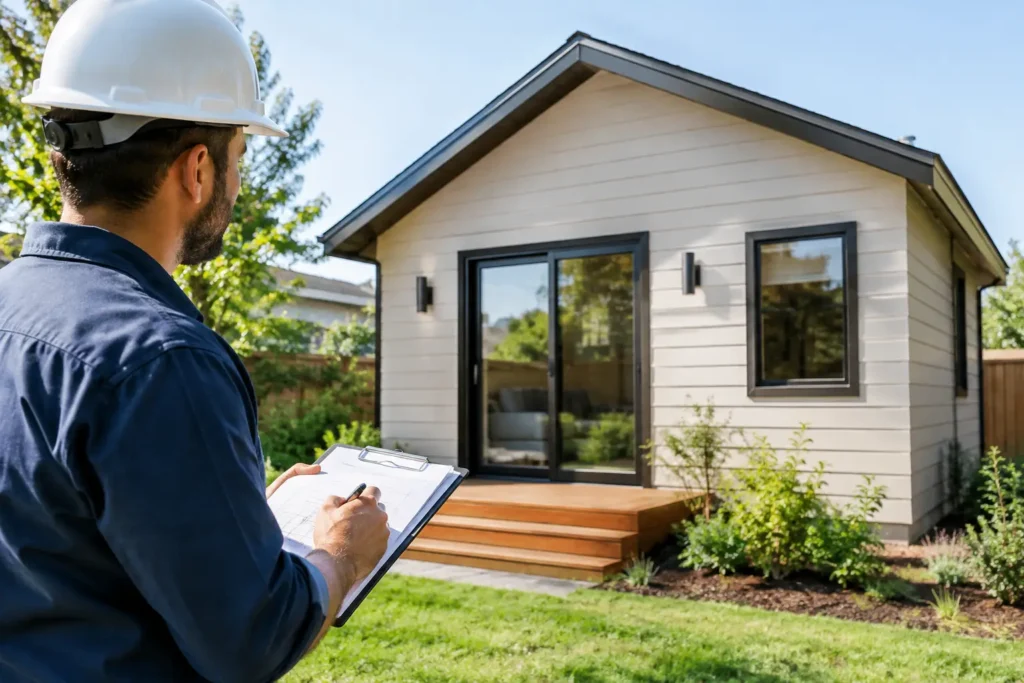
For example, a detached backyard ADU may look simple on paper. But if the path from the street to the unit requires a new water line beneath concrete, landscaping, or a finished driveway, the scope grows. Knowing that early gives you a more honest budget and helps prevent change orders later.
Questions to Ask Before You Approve ADU Plans
Before moving forward, ask your project team whether the ADU will be classified as new construction, an addition, or a conversion. Ask whether residential fire sprinklers are required at your address and whether the primary residence’s existing system affects that answer.
You should also ask how the system will be supplied. Will it connect to the existing domestic water line? Does the property have sufficient pressure and flow? Will any utility upgrades, trenching, or street-side work be required? These questions help reveal the full scope before construction starts.
Finally, ask who is responsible for coordinating the fire sprinkler plans and inspections. In many jurisdictions, the sprinkler design must be prepared by a qualified professional and submitted for approval. Clear responsibility keeps the permit process moving and reduces confusion between trades.
Do Not Rely on Another Property’s Experience
It is common to hear that a neighbor built an ADU without sprinklers. That information can be useful, but it is not a permit strategy. Their project may have been a conversion rather than a new build. It may have been approved under a different code cycle. Their lot may have different access, water service, zoning, or fire conditions.
The same applies to online estimates. They can provide a general sense of possible costs, but they cannot tell you what a plan reviewer will require for your property. A proper preconstruction review is the safer path, especially when you are building for rental income, family housing, or long-term property value.
A well-planned ADU should meet code, fit the property, and stay aligned with your budget from the beginning. If you are considering an ADU, garage conversion, or home addition in the Los Angeles area, contact Greenwood Contractors for a free estimate and a practical conversation about your project.